How Is ExoMind Different From Traditional TMS Therapy?
 Yaser Elqutub
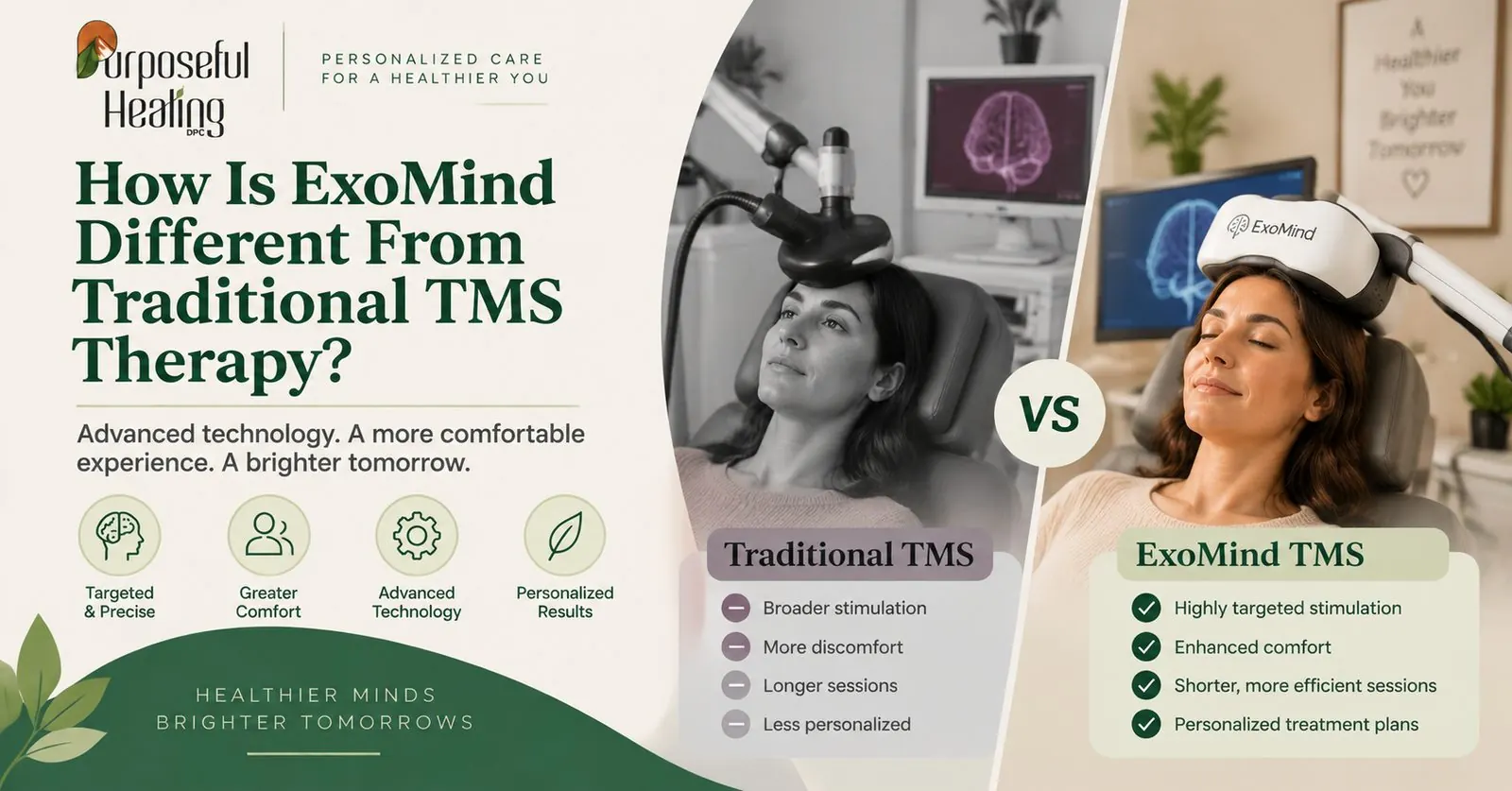
ExoMind and traditional TMS both use magnetic pulses to treat depression; ExoMind is one specific platform with its own coil, software and treatment workflow, and its sessions at Purposeful Healing take under 30 minutes. Here is how they compare.
Living with depression can affect nearly every part of your life. Persistent sadness, low motivation, mental fatigue, sleep problems, and difficulty concentrating can make work, relationships, and everyday responsibilities feel overwhelming. Even spending time with family may become difficult when you no longer feel connected to the activities or people you care about. When these symptoms continue, it can be frustrating to feel that you are trying everything without experiencing meaningful improvement.
Depression treatment often begins with psychotherapy, medication, lifestyle changes, or a combination of these approaches. Although these options help many patients, they do not work equally well for everyone. Some people experience medication side effects, while others receive only partial relief. These challenges may encourage patients to explore advanced, noninvasive treatments such as repetitive transcranial magnetic stimulation, or rTMS. However, the growing number of TMS systems can make it difficult to understand which option may be appropriate.
Purposeful Healing DPC offers ExoMind TMS therapy in Dallas as part of its personalized, whole-person approach to mental wellness. Dr. Yaser Elqutub and the care team evaluate each patient’s symptoms, medical history, medications, previous treatments, and personal goals before recommending care. Rather than treating ExoMind as an isolated technology, the practice considers how it may fit alongside primary care, therapy, lifestyle support, and other appropriate treatments.
What Is Traditional TMS Therapy?
Traditional TMS therapy generally refers to established repetitive transcranial magnetic stimulation systems used to treat certain mental health conditions, particularly major depressive disorder. During treatment, an electromagnetic coil is placed against the scalp and delivers repeated magnetic pulses to a targeted brain region.
These magnetic pulses create small electrical currents in the underlying brain tissue. The stimulation is intended to influence the activity of nerve cells and communication within networks involved in mood regulation.
Traditional TMS is noninvasive and does not require surgery, injections, or anesthesia. Patients remain awake during treatment and can usually return to their regular activities afterward.
The term “traditional TMS,” however, does not describe one specific machine or protocol. Different FDA-cleared systems can vary in:
- Coil design and positioning: Different TMS devices may use different coil shapes and targeting approaches to stimulate a selected brain region.
- Treatment frequency: Some systems deliver high-frequency, low-frequency, intermittent, or patterned magnetic stimulation based on the prescribed protocol.
- Session duration: Appointment length varies according to the device, stimulation pattern, clinical indication, and protocol selected by the clinician.
- Treatment schedule: Some patients attend sessions five days per week for several weeks, while other protocols may use a different schedule.
Therefore, comparisons between ExoMind and “traditional TMS” should be made carefully. ExoMind is not being compared with one universal treatment experience because conventional TMS systems and protocols are not identical.
What Is ExoMind TMS Therapy?
ExoMind is a branded treatment platform that uses ExoTMS technology, a form of repetitive transcranial magnetic stimulation. Like other TMS systems, it delivers magnetic pulses through a coil placed against the scalp.
ExoMind is designed to target the dorsolateral prefrontal cortex, commonly called the DLPFC. This area of the brain contributes to mood regulation, attention, decision-making, and cognitive control. Changes in communication within mood-related brain networks may be associated with depressive symptoms.
Repeated stimulation may encourage changes in nerve-cell activity and communication. This ability of the brain to adjust its connections and activity is known as neuroplasticity. When treatment is effective, improvements generally develop gradually across a series of sessions rather than immediately following one visit.
ExoMind is FDA-cleared for depression. Although promotional information may discuss emotional regulation, cognitive performance, cravings, or other wellness concerns, these should not automatically be presented as independently FDA-cleared indications.
How Is ExoMind Similar to Traditional TMS?
The most important fact is that ExoMind and traditional TMS are based on the same general therapeutic principle. ExoMind is a type of TMS platform, not an unrelated treatment.
Both approaches share several characteristics:
- Both use magnetic stimulation: ExoMind and other rTMS systems use electromagnetic pulses to influence activity within selected brain networks.
- Both are noninvasive: Treatment does not require incisions, implanted electrodes, injections, or surgical procedures.
- Both keep patients awake: General anesthesia and sedation are not normally required during an outpatient TMS session.
- Both involve repeated sessions: Treatment is typically delivered over multiple visits because therapeutic effects are expected to develop over time.
- Both require clinical screening: Medical history, medications, seizure risks, implanted devices, and neurological conditions must be reviewed before treatment.
- Both have variable outcomes: Some patients experience substantial improvement, some notice partial relief, and others may not respond adequately.
Neither option should be described as a guaranteed cure for depression. Treatment outcomes depend on the individual, the diagnosis, the prescribed protocol, attendance, previous treatment history, and other clinical factors.
How Is ExoMind Different From Traditional TMS?
The clearest differences relate to the specific device, treatment workflow, positioning method, software, clinical protocol, and patient experience. These differences do not automatically mean that one treatment is universally better.
Purposeful Healing DPC states that its ExoMind sessions take under 30 minutes. Traditional TMS appointment lengths can vary widely because different devices and protocols are used. Some established protocols take approximately 20 to 40 minutes, while certain newer patterned protocols can be shorter.
ExoMind may differ from another TMS system in the following ways:
- Branded treatment platform: ExoMind is a specific commercial system, while “traditional TMS” is a broad term covering multiple devices and treatment protocols.
- Device-specific technology: ExoMind uses its own coil, software, stimulation settings, and treatment workflow developed for the ExoTMS platform.
- Session structure: Purposeful Healing DPC provides ExoMind sessions lasting under 30 minutes, although the complete appointment may include preparation and assessment.
- Clinical setting: At Purposeful Healing DPC, ExoMind is incorporated into a broader direct primary care and whole-person wellness model.
- Patient monitoring: Symptoms, daily functioning, sleep, concentration, and treatment tolerance may be monitored throughout the treatment course.
| Feature | ExoMind at Purposeful Healing | Traditional TMS |
| Session length | Under 30 minutes; the first appointment may take longer | Varies by device and protocol |
| Sessions per week | Set by your doctor based on your goals and how you respond | Some protocols use five days per week; others differ |
| Course length | Multiple sessions over several weeks | Several weeks for some protocols; varies by protocol |
| Sensation | Clicking sounds; tapping, pressure or tingling on the scalp | Clicking sounds; tapping, pressure or tingling on the scalp |
| FDA clearance | FDA-cleared for depression | Different FDA-cleared systems; the first TMS device for depression was cleared in 2008 |
| Cost | One session a month is a $250 monthly add-on for Purposeful Plus and Elite members (membership) | Insurance coverage or out-of-pocket costs vary |
These distinctions should not be turned into unsupported claims. ExoMind should not be called more powerful, more precise, deeper, faster acting, or more effective than every traditional TMS system unless a direct, high-quality comparison supports that statement.
How Do ExoMind and Traditional TMS Sessions Compare?
During both treatments, the patient usually sits in a chair while a magnetic coil is positioned against the scalp. The device produces clicking sounds, and the patient may feel tapping, pressure, or tingling at the treatment site.
The initial appointment may take longer because the treatment team needs to complete screening and identify the appropriate coil position and stimulation level. Follow-up appointments generally focus on delivering the prescribed treatment and monitoring the patient’s response.
With ExoMind at Purposeful Healing DPC, patients can generally expect:
- A personalized consultation: The care team reviews symptoms, health history, medications, previous treatments, safety considerations, and treatment goals.
- Noninvasive treatment: The device is positioned against the scalp without needles, surgery, sedation, or anesthesia.
- A short outpatient session: The practice reports treatment sessions of under 30 minutes, depending on the prescribed plan.
- No planned recovery period: Most patients can return to work, drive, or continue their regular activities after the appointment.
- Ongoing evaluation: The clinician can monitor symptoms, functional changes, side effects, and overall progress throughout the treatment course.
Patients considering other forms of TMS should ask the provider about the exact device, protocol, session duration, treatment schedule, and clinical evidence. “Traditional TMS” alone does not provide enough information to predict the experience.
Who May Be a Candidate for ExoMind?
ExoMind may be considered for adults with depression following a comprehensive clinical assessment. It may be particularly relevant when previous treatments have not provided enough relief, medication side effects have been difficult, or a patient wants to discuss a non-drug treatment.
However, depression-like symptoms may also be related to bipolar disorder, thyroid problems, sleep disorders, medication effects, grief, substance use, or other medical and psychological conditions. Proper evaluation helps clarify the diagnosis before treatment begins.
Purposeful Healing DPC’s approach to holistic primary care for anxiety and depression considers how mental and physical health may interact. Patients may also receive appropriate therapy services in Dallas as part of a broader care plan.
Important screening factors include:
- Seizure history: Tell the clinician about personal or family seizure history, neurological conditions, previous brain injuries, and significant episodes of unconsciousness.
- Metal or electronic implants: Disclose implanted devices or metal in or near the head, even if you are uncertain whether the item creates a treatment risk.
- Medication changes: Provide a current list of prescriptions, over-the-counter medicines, and supplements because certain changes may influence treatment planning.
- Current psychiatric symptoms: Mania, psychosis, suicidal intent, or an inability to remain safe may require immediate evaluation or a different level of care.
What Are the Possible Benefits and Limitations?
One potential benefit of ExoMind and other TMS treatments is that stimulation is directed toward a selected brain area rather than circulating throughout the entire body. Treatment is noninvasive and does not normally require anesthesia or downtime.
TMS may be used alongside psychotherapy or medication when clinically appropriate. Patients should never stop antidepressants or change their dosage without guidance from the prescribing professional.
The treatment also has important limitations. ExoMind may not help every patient, and improvement cannot be guaranteed. It may require repeated visits, and insurance coverage or out-of-pocket costs can vary.
Meaningful progress may include changes in:
- Mood and motivation: Patients may notice that routine responsibilities or previously enjoyable activities become easier to approach.
- Daily functioning: Improvement may appear through better work performance, increased social engagement, or greater participation in family life.
- Sleep and energy: Some patients may notice changes in sleep or energy as their depression improves, although these symptoms can have other causes.
- Concentration: The ability to complete tasks or remain mentally engaged may improve as depressive symptoms become more manageable.
Progress should be evaluated across multiple areas rather than based on one good day. Helpful support may also include compassionate strategies for managing depression alongside professional treatment.
What Side Effects Can Occur With ExoMind or Traditional TMS?
The potential side effects of ExoMind are generally consistent with those associated with rTMS. Common effects can include temporary headache, scalp tenderness, tingling, or facial muscle twitching during treatment.
TMS devices also produce clicking sounds, so hearing protection may be provided according to the device instructions and clinic protocol. Patients should tell the treatment team if discomfort becomes difficult to tolerate.
A seizure is a rare but serious potential risk. Thorough screening is necessary to evaluate medications, neurological conditions, substance use, sleep deprivation, implanted devices, and other relevant factors.
TMS is not emergency mental health care. Anyone experiencing suicidal intent, an inability to stay safe, or an immediate crisis should call 911, visit the nearest emergency department, or call or text 988 in the United States.
How Can Whole-Person Care Improve the Treatment Experience?
Depression can involve emotional, physical, medical, social, and behavioral factors. Sleep quality, nutrition, activity, chronic health conditions, stress, relationships, and substance use may all influence symptoms and recovery.
Whole-person care does not mean depression can be overcome through willpower, exercise, or positive thinking. Instead, it means evaluating the complete patient and combining appropriate treatments with practical support.
Depending on individual needs, care may include lifestyle counseling in Dallas, structured mindfulness practices for anxiety and depression, therapy, medication management, or medical care.
Purposeful Healing DPC incorporates ExoMind into its direct primary care approach. Patients can also review the qualifications and backgrounds of the Purposeful Healing care team before scheduling a consultation.
How Can You Choose Between ExoMind and Another TMS System?
The decision should be based on more than branding or session length. Ask each provider which device and protocol they use, what condition it is cleared to treat, how candidacy is evaluated, and how progress is measured.
Important questions include:
- Which diagnosis is the treatment intended to address?
- Is the proposed use consistent with the device’s FDA clearance?
- How many sessions may be recommended?
- How long does each appointment take?
- What side effects and contraindications apply?
- Who supervises treatment?
- How will improvement be measured?
- What happens if symptoms do not improve?
- Can treatment continue alongside medication or therapy?
- What are the total expected costs?
Purposeful Healing DPC offers ExoMind TMS therapy in Dallas within a personalized care setting. To discuss whether it may be appropriate for you, contact Purposeful Healing DPC or call (469) 949-2730.
FAQs
What Is the Main Difference Between ExoMind and Traditional TMS?
ExoMind is a specific branded rTMS platform, while traditional TMS is a broad term covering multiple devices and protocols. Both use magnetic stimulation and require professional assessment.
Is ExoMind More Effective Than Traditional TMS?
There is not enough basis to say ExoMind is universally more effective than every traditional TMS system. Results depend on the patient, diagnosis, protocol, and treatment response.
Is ExoMind FDA-Cleared?
ExoMind is FDA-cleared for depression. Other promoted mental-wellness applications should not automatically be described as having the same FDA clearance.
How Long Does an ExoMind Session Take?
Purposeful Healing DPC reports that ExoMind treatment sessions take under 30 minutes. Total appointment time and the treatment schedule may vary according to individual needs.
Does ExoMind Require Anesthesia?
No. ExoMind is noninvasive and generally does not require anesthesia or sedation. Patients remain awake during treatment and can usually resume normal activities afterward.
Does ExoMind Hurt?
Patients may feel tapping, tingling, pressure, or temporary scalp discomfort. Tell the treatment team if the sensation becomes painful or difficult to tolerate.
How Many ExoMind Sessions Will I Need?
The recommended number depends on the prescribed protocol, diagnosis, symptom severity, previous treatments, and response. Your clinician should establish a personalized schedule after evaluation.
Can I Continue Antidepressants During ExoMind Treatment?
TMS may be combined with antidepressants in some treatment plans. Never stop or change prescribed medication without consulting the appropriate prescribing professional.
Who Should Avoid ExoMind TMS Therapy?
People with certain metal or electronic implants, seizure risks, or neurological conditions may not qualify. A detailed medical and safety assessment is required.
Is ExoMind TMS Available in Dallas?
Yes. Purposeful Healing DPC provides ExoMind TMS therapy in Dallas. Patients can schedule a consultation to discuss eligibility, treatment expectations, pricing, and safety.
Final Thoughts
ExoMind and traditional TMS are not entirely different treatments. ExoMind is a specific rTMS platform that shares the central principles of noninvasive magnetic brain stimulation with other TMS systems. The most meaningful differences involve the device, protocol, workflow, treatment setting, session structure, and approach to patient monitoring.
The best option is not determined by branding alone. It should be based on an accurate diagnosis, appropriate FDA-cleared use, medical screening, realistic expectations, clinical supervision, and a treatment plan designed around the individual patient.
Medical Disclaimer
This content is for educational purposes and does not replace personalized medical advice, diagnosis, or treatment. Consult a qualified healthcare professional to determine whether TMS therapy is appropriate for you.