Is Skin Tightening Safe for Different Skin Types?
 Yaser Elqutub
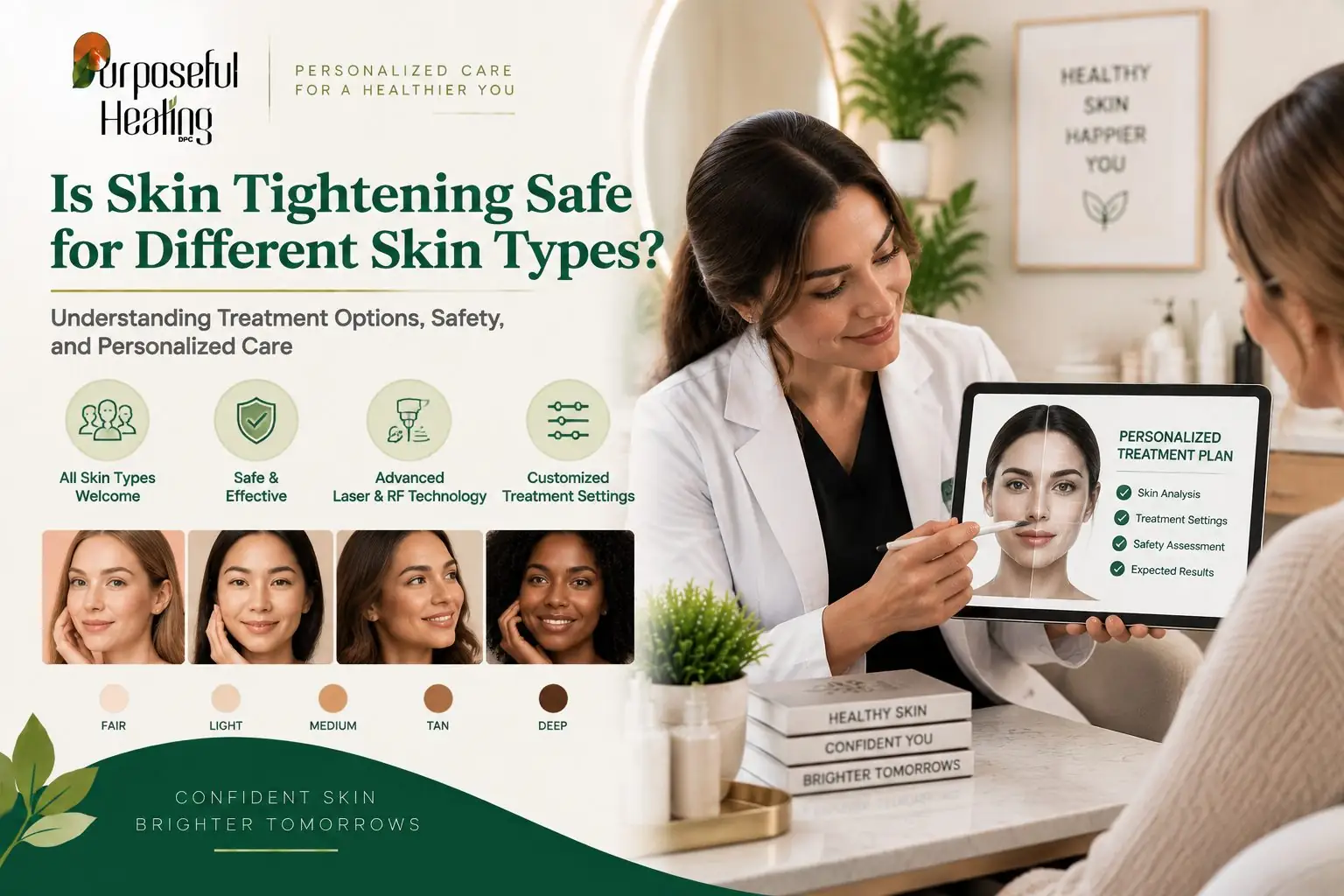
Radiofrequency and ultrasound tightening are generally safe for all skin tones; some lasers carry a higher risk of dark spots on brown and Black skin. Here is how to choose safely.
Loose or crepey skin can affect confidence. It may appear on the face, neck, arms, abdomen, or thighs because of aging, sun exposure, pregnancy, or weight changes. When skincare provides limited improvement, you may wonder whether treatment is safe for your skin tone.
Nonsurgical tightening may use laser, radiofrequency, or ultrasound to encourage collagen remodeling. These treatments suit many patients, but “safe for every skin type” is too broad. Settings, health history, training, and aftercare influence safety.
Purposeful Healing DPC provides personalized skin tightening in Dallas. The team evaluates skin tone, sensitivity, laxity, pigmentation history, medications, and goals to reduce avoidable risks and support natural-looking improvement.
What Does “Skin Type” Mean Before Treatment?
Skin type can describe oiliness, dryness, sensitivity, acne tendency, or reaction to products. In energy-based treatment, providers also consider skin tone and how easily the skin burns, tans, scars, or develops discoloration.
Important characteristics include:
- Skin tone and melanin: Higher melanin levels may absorb certain light wavelengths, making the selected laser and settings especially important.
- Sensitivity and inflammation: Eczema, rosacea, active acne, or easily irritated skin may affect timing, preparation, and aftercare.
- Pigmentation history: Previous hyperpigmentation or hypopigmentation may indicate a greater need for cautious settings and sun protection.
- Scarring tendency: A history of keloids or raised scars should be disclosed before procedures that intentionally create controlled tissue injury.
Is Laser Skin Tightening Safe for Every Skin Tone?
Laser treatment converts concentrated light into heat. Because some wavelengths interact with melanin, unsuitable devices or aggressive settings may increase burns or pigment changes in darker skin.
Melanin-rich skin does not require avoiding every laser. Certain wavelengths and nonablative approaches may be appropriate when a trained professional selects individualized equipment and settings.
Possible effects include redness, swelling, warmth, peeling, or tenderness. Less common complications include burns, infection, scarring, and lasting color changes.
Is Radiofrequency Appropriate for Different Skin Types?
Radiofrequency, or RF, creates heat using electrical energy rather than light. Because it is less dependent on melanin, RF may suit various skin tones, but no device is risk-free.
Surface RF uses an external applicator, while RF microneedling delivers heat through needles at selected depths. Their risks differ.
The FDA has reported serious complications with certain RF microneedling uses, including burns, scarring, fat loss, disfigurement, and nerve damage. It should not be performed at home.
Which Treatment Factors Affect Safety?
Safety also depends on device settings, cooling methods, and treatment depth.
Key factors include:
- Correct device selection: Technology and treatment depth should match the patient’s skin tone, laxity, and treatment area.
- Conservative settings: Excessive heat can increase burns, pigment changes, or unwanted fat loss.
- Provider training: Experience with similar skin tones and concerns is an important safety consideration.
- Realistic goals: Nonsurgical procedures cannot reproduce the results of surgical skin removal.
Purposeful Healing DPC’s guide explaining laser versus radiofrequency skin tightening can help patients understand how these technologies differ.
Who May Need to Delay or Avoid Treatment?
Treatment may be delayed for sunburned, tanned, infected, or inflamed skin. Pregnancy, medications, implants, poor healing, medical conditions, and abnormal scarring may also affect eligibility.
Before treatment, disclose:
- Prescription medicines, supplements, and topical products
- Recent tanning or prolonged sun exposure
- Previous cosmetic treatments or surgery
- Cold sores, infections, eczema, or open wounds
- Pregnancy, implanted devices, or chronic conditions
- History of keloids or pigment changes
Do not stop prescribed medication to qualify. The treating and prescribing professionals should advise about delays or modifications.
What Happens During a Skin Tightening Consultation?
The provider examines the area and discusses skin history, previous procedures, recovery preferences, expected results, alternatives, risks, and the recommended device.
A patch test may help when pigmentation or sensitivity is a concern, but it cannot guarantee complication-free treatment.
Explore aesthetics and wellness services and whether nonsurgical skin tightening is right for you before scheduling.
How Can You Reduce the Risk of Side Effects?
Follow preparation and aftercare instructions. Avoid tanning and direct sun. Your provider may advise temporarily pausing retinoids, acids, exfoliants, or other irritating products.
After treatment:
- Use sun protection: Apply broad-spectrum sunscreen and limit direct sun exposure to reduce inflammation and pigmentation risk.
- Keep skincare gentle: Use recommended cleansers and moisturizers instead of scrubs, peels, fragranced products, or aggressive active ingredients.
- Avoid excess heat: Follow guidance about hot showers, saunas, strenuous exercise, or other heat exposure during early recovery.
- Report warning signs: Contact the practice about blistering, severe pain, spreading redness, drainage, or unexpected texture and color changes.
When Should You Expect Results?
Collagen remodeling is gradual, and some patients need multiple sessions. Outcomes vary, and no procedure should promise permanent or surgical-level tightening.
Age, sun exposure, smoking, weight changes, and skincare affect longevity. Review common skin tightening myths for realistic expectations.
Why Choose Purposeful Healing DPC?
Purposeful Healing DPC personalizes treatment. Review the Purposeful Healing care team and explore noninvasive body sculpting when laxity accompanies contouring concerns.
To discuss your skin type and goals, contact Purposeful Healing DPC or call (469) 949-2730.
What Are the Top FAQs About Skin Tightening Safety?
Is Skin Tightening Safe for Dark Skin?
It may be safe when the correct technology and settings are selected. Patients should choose a provider experienced in treating melanin-rich skin.
Is Laser Skin Tightening Safe for Sensitive Skin?
Sensitivity does not always prevent treatment, but rosacea, eczema, inflammation, or product reactions may require modifications or postponement.
Is Radiofrequency Safe for All Skin Tones?
RF may be suitable across many skin tones because it is less dependent on pigment. Safety still depends on device selection, settings, and training.
Can Skin Tightening Cause Hyperpigmentation?
Yes, post-inflammatory hyperpigmentation can occur, particularly after excessive heat or inflammation. Proper selection and sun protection may reduce risk.
Can Treatment Make My Skin Lighter?
Hypopigmentation is a possible complication of some energy-based treatments. Discuss any history of color changes before treatment.
Should I Avoid Treatment After Tanning?
Recent tanning may increase risks, especially with certain lasers. Disclose sun exposure and allow the provider to determine safe timing.
Is a Patch Test Necessary?
A provider may recommend one based on your skin and device. It may inform planning but cannot guarantee a complication-free result.
How Many Sessions Will I Need?
The number depends on the technology, laxity, area, and goals. Your provider should recommend a personalized course after examination.
Does Skin Tightening Hurt?
Patients may feel warmth, tingling, or snapping sensations. Pain expectations vary by device, intensity, and whether numbing is used.
When Should I Call the Provider After Treatment?
Contact the practice about blistering, severe pain, drainage, worsening redness, or unexpected skin-color and texture changes.
Final Thoughts
Skin tightening may suit different skin types, but safety depends on technology, settings, experience, history, and aftercare. Personalized assessment is essential, especially for sensitive or melanin-rich skin.
Medical Disclaimer
This content is educational and does not replace medical advice. Consult a qualified healthcare professional for recommendations based on your skin type and health history.