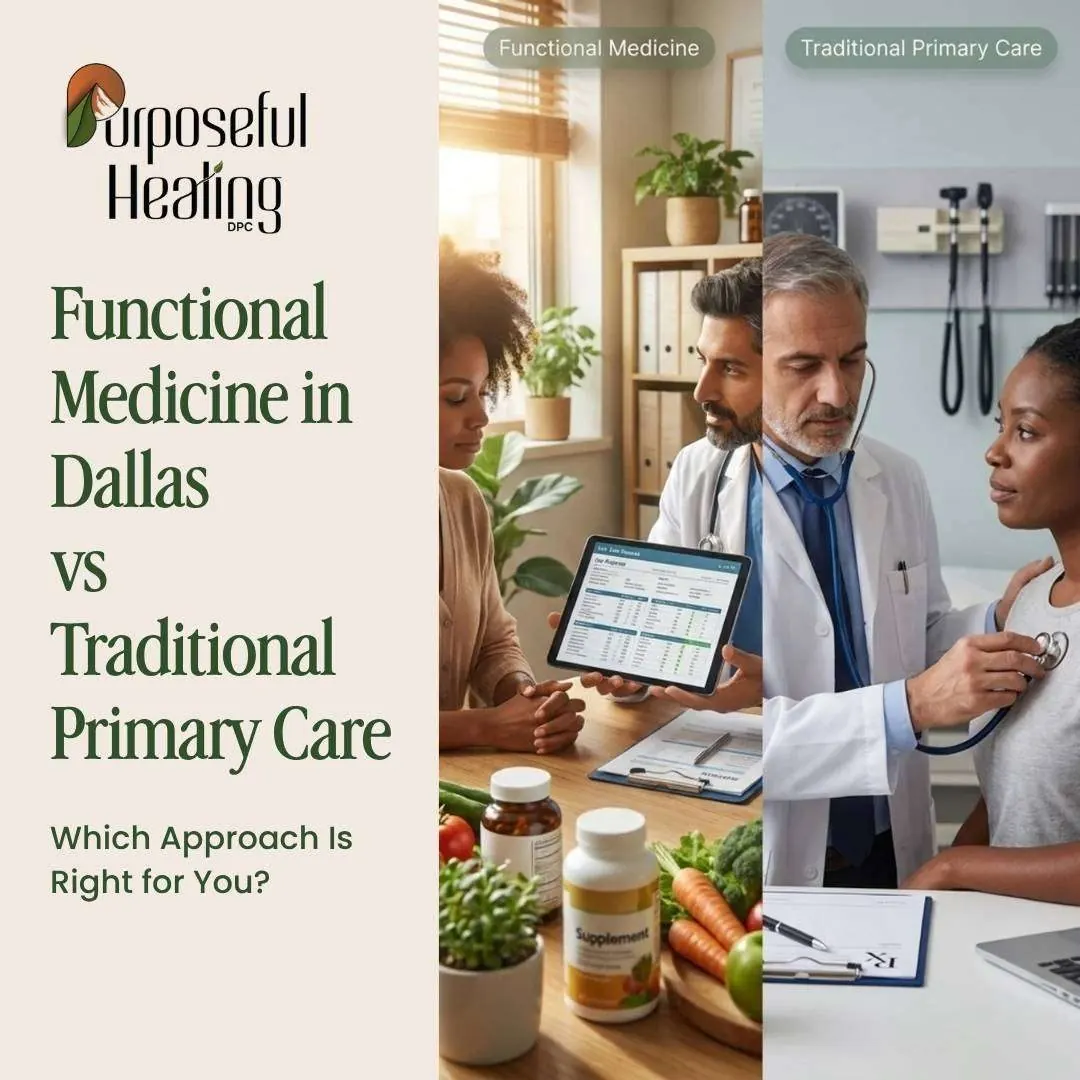
Functional Medicine vs Traditional Primary Care: Which Approach Is Right for You?
 Yaser Elqutub
Finding the right healthcare approach can be challenging, especially when you are dealing with ongoing symptoms that affect your daily life. Many people experience concerns such as fatigue, digestive problems, weight changes, hormonal issues, poor sleep, stress, or recurring health challenges without understanding the factors contributing to these problems.
When symptoms continue, some patients feel they need more than short-term solutions. They want to better understand their health, identify possible contributing factors, and create a plan that supports long-term wellness.
This is where the difference between functional medicine and traditional primary care becomes important.
Traditional primary care has been the foundation of healthcare for decades. It focuses on preventive screenings, diagnosing medical conditions, treating illnesses, managing chronic diseases, and coordinating care with specialists.
Functional medicine takes a more personalized approach by looking at how different factors, including nutrition, lifestyle, environment, and daily habits, may influence overall health.
So, which approach is better?
The answer depends on your healthcare needs, personal goals, and the type of support you are looking for. Many patients benefit from combining preventive primary care with functional medicine strategies to address both immediate healthcare needs and long-term wellness goals.
At Purposeful Healing Direct Primary Care in TX, Dr. Yaser Elqutub combines primary care expertise with direct primary care services and functional medicine principles to provide personalized, patient-centered healthcare.
The goal is to understand each patient’s unique health journey and create wellness strategies based on individual needs.
Functional Medicine vs Traditional Primary Care
The main difference between functional medicine and traditional primary care is the approach to understanding health concerns.
Traditional primary care focuses on diagnosing conditions, managing symptoms, providing preventive screenings, and treating medical issues using established healthcare approaches.
Functional medicine focuses on personalized care by exploring lifestyle factors, nutrition, health history, and possible contributors behind symptoms.
Both approaches have important roles in healthcare. The right choice depends on your health goals and the level of personalization you need.
| Feature | Functional Medicine | Traditional Primary Care |
| Main Focus | Identifying contributing factors and creating personalized wellness plans | Diagnosing, treating, and managing medical conditions |
| Approach | Whole-person and lifestyle-focused | Condition-focused and evidence-based medical care |
| Health Evaluation | Considers nutrition, lifestyle, environment, and health history | Focuses on symptoms, diagnosis, screenings, and treatment |
| Prevention | Emphasizes proactive wellness strategies | Provides preventive screenings and routine care |
| Treatment Style | Personalized recommendations based on individual needs | Standard medical protocols and treatments |
| Best For | Patients seeking deeper health evaluation and lifestyle support | Routine healthcare, medical management, and preventive care |
What Is Functional Medicine?
Functional medicine is a healthcare approach that focuses on understanding the underlying factors that may contribute to health concerns.
Instead of only asking:
“What condition is causing this symptom?”
Functional medicine often explores a broader question:
“Why is this happening, and what factors may be influencing this person’s health?”
This approach considers that many aspects of health are connected.
Nutrition, sleep patterns, stress levels, physical activity, environment, and daily habits can all influence how the body functions.
A functional medicine approach may include a detailed review of a patient’s:
- Complete health history
- Lifestyle habits
- Nutrition patterns
- Wellness goals
- Current concerns
- Preventive health needs
The goal is to create a personalized plan that supports better health outcomes over time.
Functional medicine does not focus only on treating symptoms after they appear. It emphasizes understanding health patterns and making proactive changes that may support overall wellness.
Core Principles of Functional Medicine
Functional medicine is built around several important principles that focus on personalized and preventive healthcare.
Root-Cause Evaluation
One of the main principles of functional medicine is looking beyond symptoms.
Instead of only addressing a health concern after it develops, functional medicine explores possible factors that may contribute to the problem.
These factors may include:
- Nutrition habits
- Sleep quality
- Stress levels
- Lifestyle patterns
- Environmental influences
- Overall health history
Understanding these factors can help create a more personalized approach to care.
Personalized Healthcare Plans
Every person has different health needs.
A functional medicine approach recognizes that the same symptoms may have different contributing factors depending on the individual.
Personalized care considers:
- Your medical background
- Your lifestyle
- Your health goals
- Your daily challenges
- Your preferences
This allows healthcare recommendations to be more specific to your situation.
A personalized approach is similar to personalized healthcare models that focus on creating care strategies based on individual needs instead of applying the same plan to every patient.
Lifestyle-Based Healthcare
Functional medicine recognizes that daily habits play an important role in long-term health.
Areas commonly considered include:
- Nutrition
- Exercise
- Sleep
- Stress management
- Healthy routines
Improving these areas may support overall wellness and help patients become more involved in their healthcare decisions.
Preventive Health Focus
Prevention is an important part of functional medicine.
Instead of waiting until health concerns become more serious, this approach encourages proactive steps that support wellness.
Preventive strategies may include:
- Improving nutrition habits
- Supporting healthy routines
- Monitoring health changes
- Addressing risk factors early
Regular preventive visits, including an annual physical, can also help identify important health concerns before they become more complicated.
Whole-Person Approach
Functional medicine considers the connection between different areas of health.
Rather than looking at one symptom in isolation, it evaluates the relationship between:
- Physical health
- Lifestyle choices
- Emotional wellness
- Daily environment
This broader perspective helps create a more complete understanding of an individual’s health needs.
What Is Traditional Primary Care?
Traditional primary care is the most common healthcare approach used by individuals and families. It focuses on providing routine medical care, preventing illness, diagnosing health conditions, treating acute concerns, and managing ongoing medical issues.
A primary care physician serves as the first point of contact for many healthcare needs. They help patients maintain their health through regular checkups, screenings, medical evaluations, and treatment recommendations.
Many patients choose a primary care doctor for ongoing healthcare support, preventive services, and medical guidance throughout different stages of life.
Traditional primary care typically focuses on identifying specific health conditions and providing appropriate medical care based on established clinical guidelines.
Common areas managed through primary care include:
- Preventive health screenings
- Acute illnesses
- Chronic disease management
- Vaccinations
- Medication management
- Referrals to specialists
Primary care plays an essential role in helping patients detect health concerns early and receive appropriate treatment.
Common Services Provided by Traditional Primary Care
Traditional primary care includes a wide range of healthcare services designed to support patients throughout different stages of life.
Annual Wellness Visits
Routine wellness visits allow healthcare providers to evaluate your overall health and identify potential concerns before they become more serious.
During these visits, providers may review:
- Medical history
- Current medications
- Lifestyle habits
- Preventive health needs
- Health risk factors
Regular checkups are an important part of maintaining long-term health.
An annual physical can help patients monitor important health factors and discuss preventive strategies with their healthcare provider.
Preventive Screenings
Preventive care focuses on identifying potential health concerns early.
Depending on your age, health history, and risk factors, screenings may include:
- Blood pressure checks
- Cholesterol testing
- Diabetes screening
- Cancer screenings
- Routine laboratory evaluations
Early detection can help patients take action before certain conditions progress.
Preventive healthcare works best when patients maintain regular communication with their healthcare provider and stay proactive about their wellness.
Treatment of Acute Illnesses
Primary care providers commonly diagnose and treat short-term health concerns.
Examples include:
- Cold and flu symptoms
- Infections
- Allergies
- Minor injuries
- Common illnesses
Primary care provides convenient access to medical evaluation and treatment for many everyday health concerns.
For patients who need convenient access to healthcare without always visiting the office, virtual appointments may provide an additional option when appropriate.
Chronic Condition Management
Primary care physicians help patients manage ongoing health conditions through regular monitoring and treatment plans.
Common chronic conditions managed in primary care include:
- Diabetes
- High blood pressure
- High cholesterol
- Asthma
- Thyroid conditions
Ongoing care helps patients track changes, adjust treatments when needed, and maintain better health outcomes.
Effective chronic disease management focuses on monitoring conditions, supporting healthy habits, and helping patients maintain better long-term wellness.
Specialist Referrals and Care Coordination
When specialized medical care is needed, primary care providers help coordinate referrals to appropriate specialists.
This ensures that patients receive the right care while maintaining communication between different healthcare providers.
Care coordination is especially important for patients managing multiple health concerns because it helps create a more organized healthcare experience.
Functional Medicine vs Traditional Primary Care:
When comparing functional medicine vs traditional primary care, the biggest difference is the way each approach evaluates and manages health concerns.
Traditional primary care generally focuses on diagnosing a medical condition and providing treatment based on established medical guidelines.
Functional medicine expands the evaluation process by exploring lifestyle factors, nutrition, environmental influences, and other possible contributors that may affect health.
Both approaches are valuable, and many patients benefit from having access to preventive primary care while also incorporating personalized wellness strategies.
| Focus of Care | Traditional Primary Care | Functional Medicine |
| Main Goal | Diagnose and manage medical conditions | Understand contributing factors and create personalized wellness strategies |
| Health Evaluation | Symptoms, diagnosis, screenings, treatment | Nutrition, lifestyle, environment, health history |
| Treatment Approach | Standard medical protocols | Personalized recommendations based on individual needs |
| Prevention | Routine screenings and preventive care | Lifestyle improvement and proactive wellness strategies |
| Patient Role | Follows medical recommendations | Actively participates in healthcare decisions |
How Functional Medicine and Traditional Primary Care Can Work Together
Functional medicine and traditional primary care do not have to be viewed as competing approaches.
In many cases, patients benefit from combining both strategies.
Traditional primary care provides essential services such as:
- Medical diagnosis
- Preventive screenings
- Medication management
- Treatment of acute conditions
- Chronic disease monitoring
Functional medicine may provide additional support through:
- Lifestyle guidance
- Nutrition strategies
- Personalized wellness planning
- Evaluation of health patterns
A combined approach allows patients to address immediate healthcare needs while also focusing on long-term wellness.
A personalized healthcare approach can help create strategies that consider each patient’s unique health goals, lifestyle, and medical background.
Why Patients Seek Functional Medicine
Many patients begin exploring functional medicine when they want a more personalized approach to understanding their health.
Some individuals feel frustrated when they continue experiencing symptoms without clear answers. Others want to take a proactive approach and improve their health before problems become more serious.
Functional medicine focuses on understanding the relationship between lifestyle, nutrition, environment, and overall wellness.
Common reasons patients seek functional medicine include:
Ongoing or Unexplained Symptoms
Some people experience concerns such as:
- Fatigue
- Digestive discomfort
- Weight changes
- Sleep difficulties
- Low energy
even after receiving routine medical evaluations.
Functional medicine explores possible lifestyle and health factors that may contribute to these concerns.
Instead of only focusing on treating symptoms, this approach looks at patterns that may influence overall health, including nutrition habits, stress levels, sleep quality, and daily routines.
Desire for Personalized Healthcare
Many patients prefer healthcare plans that are designed around their individual needs rather than general recommendations.
A personalized approach considers:
- Health history
- Daily habits
- Wellness goals
- Lifestyle challenges
This allows healthcare recommendations to better match the individual.
Patients who want a more individualized healthcare experience may benefit from personalized healthcare advantages that focus on patient needs, goals, and long-term wellness.
Focus on Preventive Wellness
Some patients seek functional medicine because they want to improve their health proactively.
Preventive wellness may include:
- Improving nutrition habits
- Supporting healthy routines
- Managing stress
- Optimizing lifestyle factors
The goal is to create habits that support long-term health instead of waiting until concerns become more complicated.
Lifestyle Improvement Support
Health is influenced by many daily choices.
Patients may seek functional medicine guidance for support with:
- Nutrition
- Exercise routines
- Sleep habits
- Stress management
Making sustainable lifestyle changes can play an important role in overall wellness.
A lifestyle counseling approach can help patients develop realistic strategies that fit their daily routines and personal health goals.
Benefits of Choosing a Functional Medicine Doctor
Choosing a healthcare provider is an important decision, especially when you are looking for more personalized support for your health goals.
A functional medicine doctor may provide a more comprehensive approach by looking beyond individual symptoms and considering the different factors that influence your overall wellness.
At Purposeful Healing Direct Primary Care, the goal is to understand each patient’s unique health journey and create care strategies that align with their specific needs.
Potential benefits of a functional medicine approach include:
More Personalized Healthcare
One of the main differences between functional medicine and traditional healthcare models is the level of personalization.
Instead of applying the same approach to every patient, functional medicine considers factors such as:
- Personal health history
- Lifestyle habits
- Nutrition patterns
- Daily routines
- Individual health goals
This allows healthcare recommendations to be more specific and relevant to each person.
Comprehensive Health Evaluation
Functional medicine takes a broader look at health by considering multiple factors that may influence how you feel and function.
A comprehensive evaluation may include reviewing:
- Current symptoms
- Medical history
- Nutrition habits
- Sleep patterns
- Stress levels
- Physical activity
- Overall lifestyle
Understanding these connections can help identify areas where positive changes may support better wellness.
Focus on Preventive Health
Preventive care is an important part of maintaining long-term health.
Functional medicine emphasizes proactive strategies that may help patients take control of their wellness before concerns become more complicated.
Preventive health strategies may include:
- Improving daily nutrition habits
- Supporting healthy lifestyle routines
- Monitoring important health factors
- Identifying potential risks early
Lifestyle Support and Guidance
Many health concerns are influenced by daily habits.
A functional medicine approach recognizes the importance of lifestyle factors such as:
- Nutrition
- Sleep quality
- Exercise
- Stress management
- Healthy routines
Patients may receive guidance on making realistic changes that fit their lifestyle instead of following temporary solutions.
Greater Patient Involvement
Functional medicine encourages patients to become active participants in their healthcare.
Instead of only receiving treatment recommendations, patients are encouraged to understand how their habits, choices, and daily routines may influence their health.
This partnership between patient and provider can create a more engaging healthcare experience.
How Purposeful Healing DPC Combines Primary Care and Functional Medicine
At Purposeful Healing Direct Primary Care, TX, Dr. Yaser Elqutub combines primary care knowledge with functional medicine principles to provide a more personalized healthcare experience.
This approach allows patients to receive essential medical care while also focusing on lifestyle factors that contribute to long-term wellness.
Rather than rushing through appointments, the focus is on taking time to understand each patient’s concerns, goals, and health history.
The care approach focuses on:
Understanding Your Complete Health History
A person’s health is influenced by many factors.
Evaluating your complete health history may include understanding:
- Previous health concerns
- Current symptoms
- Lifestyle patterns
- Nutrition habits
- Personal wellness goals
This helps create a clearer picture of your overall health.
Creating Individualized Wellness Plans
Every patient has different needs.
A personalized wellness plan may include recommendations related to:
- Nutrition
- Lifestyle habits
- Preventive care
- Health improvement goals
The goal is to create strategies that are realistic and sustainable.
Supporting Preventive Healthcare
Preventive care focuses on maintaining health and identifying potential concerns early.
This may include:
- Regular health monitoring
- Wellness evaluations
- Lifestyle improvements
- Risk factor management
A proactive approach can help patients stay engaged with their health over time.
Providing Ongoing Health Guidance
Long-term health improvement often requires consistent support.
An ongoing relationship with a healthcare provider allows recommendations to adjust as your health needs, goals, and lifestyle change.
For patients looking for convenient and ongoing access to care, direct primary care services provide a patient-centered model focused on accessibility and personalized support.
Conditions Functional Medicine May Help Address
Functional medicine approaches may support individuals dealing with various health concerns by focusing on lifestyle factors, nutrition, and personalized wellness strategies.
It is important to understand that functional medicine does not replace necessary medical treatment. Instead, it can complement traditional healthcare by addressing factors that influence overall wellness.
Weight Management Challenges
Maintaining a healthy weight can be influenced by many factors beyond calories alone.
Functional medicine may consider:
- Nutrition patterns
- Lifestyle habits
- Activity levels
- Metabolic health factors
- Sleep and stress patterns
A personalized approach may help patients develop healthier habits that support long-term weight goals.
Patients looking for structured support may benefit from weight loss services that focus on sustainable lifestyle improvements and personalized strategies.
Digestive Health Concerns
Digestive symptoms can be influenced by multiple factors, including nutrition, lifestyle, and daily habits.
Functional medicine may explore areas such as:
- Food choices
- Eating patterns
- Lifestyle factors
- Overall wellness habits
Understanding these factors can help create a more personalized approach to digestive wellness.
Fatigue and Low Energy
Persistent fatigue can affect work, relationships, exercise, and daily activities.
A functional medicine evaluation may consider possible lifestyle contributors, including:
- Sleep quality
- Nutrition habits
- Stress levels
- Daily routines
This allows healthcare providers to better understand the factors affecting energy levels.
Metabolic Health Concerns
Metabolic health is influenced by several areas, including nutrition, activity level, and lifestyle patterns.
Personalized strategies may support goals related to:
- Healthy weight management
- Blood sugar wellness
- Better lifestyle habits
- Overall health improvement
Patients interested in improving metabolic wellness may benefit from a metabolic health diet approach that focuses on nutrition choices and sustainable habits.
Stress and Overall Wellness
Stress can affect many areas of health, including sleep, energy, and daily functioning.
Functional medicine may include lifestyle-focused strategies that support:
- Better stress management
- Healthy routines
- Improved balance
- Overall wellness
Is Functional Medicine Better Than Traditional Primary Care?
Functional medicine is not necessarily a replacement for traditional primary care. Both approaches serve important roles in healthcare.
Traditional primary care remains essential for:
- Diagnosing medical conditions
- Preventive screenings
- Managing medications
- Treating acute illnesses
- Coordinating specialist care
Functional medicine provides an additional focus on:
- Personalized wellness strategies
- Lifestyle factors
- Nutrition support
- Understanding possible contributors to health concerns
For many patients, the best approach may involve combining preventive primary care with personalized functional medicine strategies.
This allows individuals to receive appropriate medical care while also focusing on long-term health improvement.
How to Choose the Right Healthcare Approach
Choosing between functional medicine and traditional primary care depends on your healthcare goals, current concerns, and the type of support you are looking for.
Both approaches provide valuable benefits, but they focus on different aspects of healthcare.
Before choosing a provider, consider the following factors:
Identify Your Healthcare Goals
Start by understanding what you want from your healthcare experience.
If your main goal is routine medical care and preventive screenings:
Traditional primary care may be the right choice because it provides:
- Annual wellness visits
- Preventive screenings
- Treatment for common illnesses
- Chronic condition monitoring
If your goal is understanding possible contributors behind ongoing health concerns:
Functional medicine may be a better fit because it focuses on:
- Lifestyle factors
- Nutrition habits
- Personalized wellness strategies
- Long-term health improvement
Understanding your goals can help you choose an approach that matches your needs.
Consider Your Lifestyle Needs
Healthcare should fit your daily life.
A good healthcare approach should consider factors such as:
- Your schedule
- Your health priorities
- Your personal preferences
- Your ability to maintain lifestyle changes
For some patients, quick access to treatment is the main priority. Others may prefer a healthcare experience that allows more time for discussion and personalized planning.
Look for Personalized Attention
The relationship between you and your healthcare provider plays an important role in your overall healthcare experience.
A patient-centered provider should take time to understand:
- Your concerns
- Your health history
- Your goals
- Your questions
Personalized attention can help patients feel more involved and informed about their healthcare decisions.
Understand the Provider’s Approach
Before choosing a healthcare provider, it is important to understand how they approach care.
Consider asking:
- Does the provider focus on prevention?
- Do they consider lifestyle factors?
- How do they develop treatment plans?
- Do they take time to understand individual concerns?
Knowing the provider’s philosophy can help you choose care that aligns with your expectations.
Functional Medicine vs Traditional Primary Care: Which One Should You Choose?
Both functional medicine and traditional primary care offer important healthcare benefits.
Traditional primary care remains essential for diagnosing conditions, managing medical concerns, providing preventive screenings, and coordinating treatment when needed.
Functional medicine provides an additional focus on personalized healthcare by exploring lifestyle factors, nutrition, and possible contributors behind health concerns.
For many patients, the ideal healthcare approach may include both:
- Preventive medical care
- Personalized wellness strategies
- Lifestyle support
- Ongoing health guidance
The best choice depends on your individual health needs and long-term goals.
At Purposeful Healing Direct Primary Care, TX, Dr. Yaser Elqutub helps patients take a proactive approach to healthcare through personalized primary care, functional medicine principles, and preventive wellness strategies.
By understanding your health history, lifestyle, and goals, a personalized care plan can be created to support your long-term wellness journey.
Patients looking for a more accessible healthcare model may explore direct primary care services to understand how personalized care can support ongoing health management.
Key Takeaways
- Functional medicine focuses on personalized healthcare, lifestyle factors, and understanding possible contributors behind health concerns.
- Traditional primary care focuses on diagnosis, treatment, preventive screenings, and medical management.
- Both approaches play important roles in supporting patient health.
- Functional medicine is not a replacement for essential medical care but can complement traditional healthcare.
- Personalized healthcare plans consider individual needs, goals, lifestyle, and health history.
- Choosing the right healthcare approach depends on what type of support you need.
FAQs
1. What is functional medicine in Dallas?
Functional medicine in Dallas is a personalized healthcare approach that evaluates lifestyle factors, nutrition, health history, and possible contributors behind health concerns.
It focuses on understanding the individual rather than only addressing symptoms.
2. How is functional medicine different from traditional primary care?
Traditional primary care focuses on diagnosing and treating medical conditions, providing preventive screenings, and managing ongoing health concerns.
Functional medicine focuses more on personalized wellness strategies, lifestyle factors, and identifying possible contributors affecting health.
3. Is functional medicine covered by insurance?
Coverage depends on the provider, services offered, and insurance plan.
Some functional medicine practices use direct care or membership-based models, while others may offer different payment options.
Patients should check with their healthcare provider regarding costs and coverage.
4. What does a functional medicine doctor do?
A functional medicine doctor evaluates factors such as:
- Health history
- Lifestyle habits
- Nutrition patterns
- Wellness goals
They use this information to create personalized healthcare strategies.
5. Can functional medicine help with chronic conditions?
Functional medicine may support individuals managing chronic health concerns by focusing on lifestyle factors, nutrition, and personalized healthcare guidance.
It can complement traditional medical care when additional support is needed.
6. Is functional medicine only about nutrition?
No. Functional medicine considers multiple aspects of health, including:
- Nutrition
- Sleep
- Stress management
- Physical activity
- Lifestyle habits
- Overall wellness
Nutrition is one important part of a broader healthcare approach.
7. How long are functional medicine appointments?
Appointment length varies depending on the provider and type of visit.
Many functional medicine appointments allow additional time for detailed discussions about health history, lifestyle, concerns, and wellness goals.
8. Can functional medicine replace my primary care doctor?
Functional medicine does not necessarily replace traditional primary care.
Primary care remains important for medical screenings, diagnosis, emergency concerns, medication management, and specialist coordination.
Many patients benefit from combining both approaches.
9. What conditions can functional medicine address?
Functional medicine may support individuals with concerns related to:
- Fatigue
- Weight management
- Digestive wellness
- Metabolic health
- Lifestyle improvement
- Overall wellness goals
The approach focuses on personalized strategies based on individual needs.
10. How do I find the best functional medicine doctor in Dallas?
When choosing a functional medicine doctor in Dallas, consider:
- Medical training and experience
- Personalized care approach
- Provider communication style
- Healthcare philosophy
- Ability to understand your individual goals
A strong provider relationship is an important part of achieving long-term health goals.
Medical Disclaimer
This article is intended for educational purposes only and should not replace professional medical advice, diagnosis, or treatment.
Always consult a qualified healthcare professional regarding your personal health concerns, medical conditions, medications, or before making significant changes to your healthcare plan.