Joint Injections vs Physical Therapy: What Works?
 Yaser Elqutub
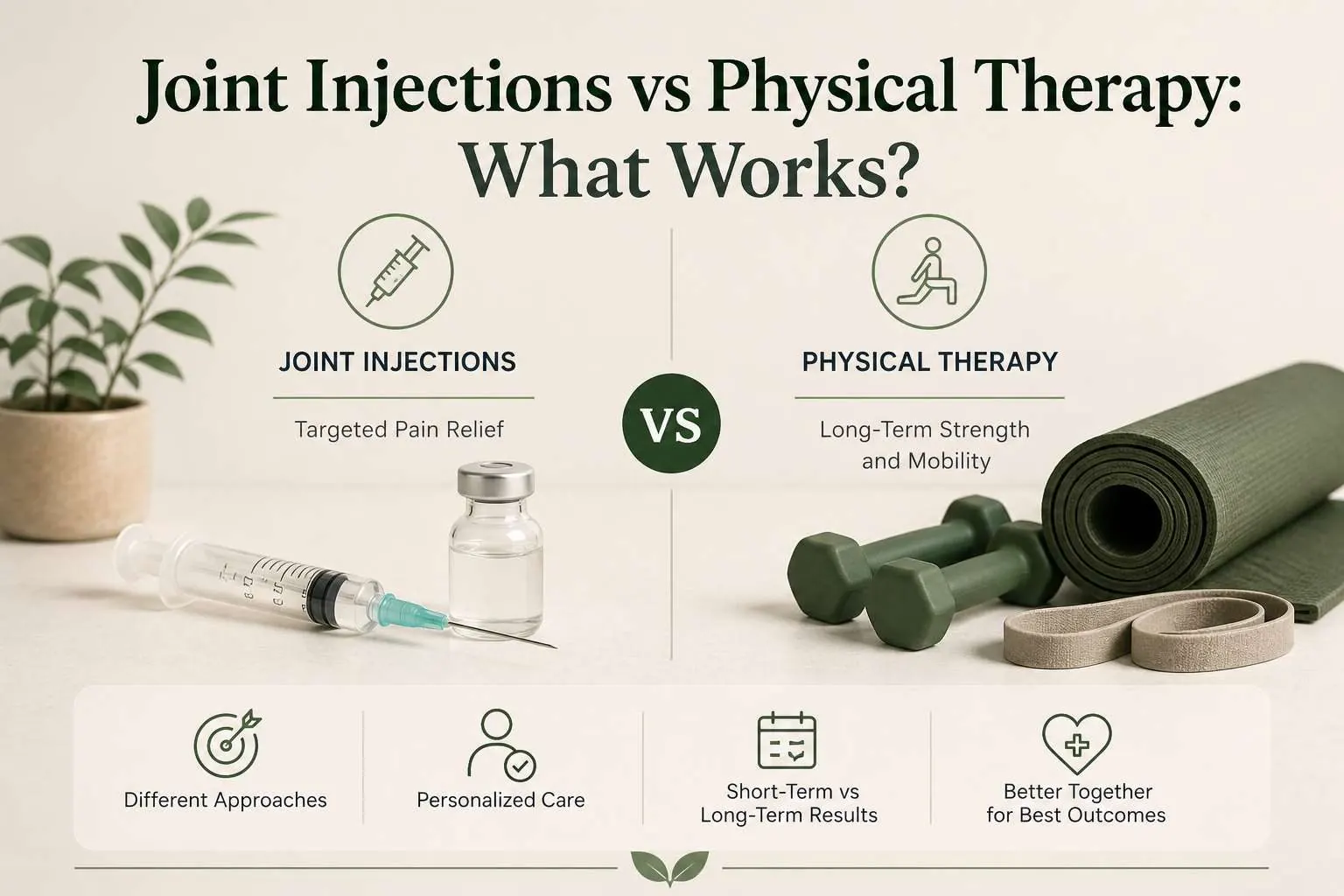
Joint pain is one of the most common reasons people seek medical care, and the treatment decision between joint injections and physical therapy is one that confuses many patients. Both approaches have legitimate evidence behind them, but they work through entirely different mechanisms, target different aspects of the problem, and are appropriate in different circumstances. Making the wrong choice, or skipping a step entirely, can lead to repeated treatments, ongoing pain, and unnecessary expense. This guide compares both options directly, explains when each is appropriate, and discusses how an integrated approach often produces the best outcomes for patients dealing with persistent joint pain.
What Are Joint Injections?
Joint injections deliver medication, most commonly a corticosteroid or hyaluronic acid, directly into a joint to reduce inflammation and pain. They are typically recommended when joint inflammation is the primary driver of symptoms and when conservative measures have not produced adequate relief. Purposeful Healing offers joint injection services as part of its pain management program for patients with conditions like osteoarthritis, bursitis, and inflammatory joint disease.
Corticosteroid injections reduce inflammation quickly and can provide significant pain relief that lasts from a few weeks to several months. Hyaluronic acid injections, sometimes called viscosupplementation, are used primarily for knee osteoarthritis and aim to restore lubrication to the joint. Platelet-rich plasma injections are a newer option that uses the patient’s own blood components to encourage tissue healing and are gaining traction in sports medicine and orthopedics.
What Does Physical Therapy Target?
Physical therapy addresses the structural and functional factors that cause or worsen joint pain: muscle weakness, movement imbalances, poor joint mechanics, and scar tissue. Rather than reducing inflammation chemically, physical therapy rebuilds the support system around the joint so it can function correctly under load. At Purposeful Healing, physical therapy is integrated with primary care, which means the treating physician and physical therapist are working from the same clinical picture rather than in silos.
Physical therapy for joint pain typically includes targeted strengthening exercises, manual therapy, joint mobilization, and modalities like heat, cold, or electrical stimulation. For patients with postural contributors to their joint problems, movement analysis and retraining are core parts of the program. The process takes time, usually several weeks to months, but the results tend to be more durable than injection therapy alone.
Comparing the Two Approaches
Speed of relief: Injections typically produce faster pain reduction, often within days. Physical therapy produces slower improvement over weeks to months.
Duration of benefit: Injection effects can last weeks to months but tend to diminish with repeat treatments. Physical therapy improvements are more durable when patients maintain the work.
Mechanism: Injections address inflammation. Physical therapy addresses structural dysfunction and muscle support.
Risk: Injections carry a small risk of infection, steroid-related tissue changes with repeated use, and temporary pain flare. Physical therapy carries low risk when properly supervised.
Patient effort required: Injections are passive. Physical therapy requires consistent participation and home exercise compliance.
Long-term joint health: Physical therapy tends to support better long-term joint function. Repeated injections without addressing underlying mechanics can accelerate joint deterioration in some cases.
When Injections Are the Right Choice
Joint injections are well-suited to specific clinical scenarios. If a patient has significant acute inflammation that is preventing them from tolerating physical therapy, an injection can reduce pain enough to allow rehabilitation to begin. This is sometimes called using an injection to create a window for therapy.
Injections are also appropriate when structural damage is severe enough that physical therapy alone is unlikely to produce meaningful improvement, or when a patient cannot participate in exercise due to other health limitations. For some patients with advanced osteoarthritis, injections as part of a managed care plan can delay the need for surgical intervention.
When Physical Therapy Is the Right Choice
Physical therapy is the better starting point for most patients whose joint pain involves muscle weakness, movement dysfunction, or biomechanical imbalance. This includes:
- Patients with knee pain related to weak quadriceps or hip stabilizers
- Shoulder pain driven by rotator cuff weakness or poor scapular mechanics
- Hip pain related to labral issues or muscle imbalance
- Low back pain affecting hip and sacroiliac joints
- Post-surgical joint rehabilitation
Physical therapy is also strongly preferred when inflammation is not the primary driver, as an injection provides little benefit in purely mechanical pain. Purposeful Healing’s team evaluates each patient’s specific presentation to determine whether chronic pain management through physical therapy, injection, or a combination is most appropriate.
The Case for Combining Both
The clinical evidence increasingly supports combination treatment for many joint conditions. An injection reduces inflammation and provides a period of lower pain during which physical therapy can be most effective. The therapy then addresses the underlying dysfunction, reduces the likelihood of recurrence, and extends the functional benefit of the injection.
This integrated approach is central to the pain management model at Purposeful Healing, where pain management services are designed to address both the symptom and the cause rather than choosing one at the expense of the other.
Role of Osteopathic Manipulation in Joint Pain
Osteopathic manipulative therapy is another tool that bridges the gap between injections and standard physical therapy. OMT involves hands-on techniques that address joint mobility restrictions, soft tissue tension, and fascial dysfunction that contribute to ongoing joint pain. For patients whose pain has a significant postural or compensatory component, OMT at Purposeful Healing can complement or in some cases reduce the need for injection therapy.
Frequently Asked Questions
How many joint injections are safe per year?
Most guidelines recommend limiting corticosteroid injections to three to four per year in a single joint to reduce the risk of cartilage damage and other side effects. Your provider will help determine the appropriate frequency based on your specific condition and response to treatment.
Does physical therapy hurt at first?
Some discomfort during early physical therapy is normal, particularly when addressing areas that have been guarded or unused due to pain. A well-supervised program should be challenging but not cause sharp or worsening pain. Communicate clearly with your therapist about your pain levels.
What type of joint pain responds best to injections?
Inflammatory conditions such as rheumatoid arthritis flares, gout affecting a joint, and moderate to severe osteoarthritis tend to show the strongest response to injection therapy. Purely mechanical pain from muscle weakness or postural imbalance typically does not respond as well.
Can I do physical therapy and get injections at the same time?
Yes, and this is often the recommended approach. The injection manages acute inflammation while the physical therapy program builds strength and corrects mechanics. Your provider can time the injection to coincide with the start of your therapy program.
What if neither injections nor PT is working?
Persistent joint pain that does not respond to either approach warrants a thorough reassessment. Factors such as undiagnosed systemic inflammatory disease, nerve involvement, or significant structural damage may require specialist evaluation or imaging to identify the correct path forward.
Conclusion
Joint injections and physical therapy are not competing treatments. They are complementary tools that work best when matched correctly to the underlying cause of the pain. Injections address inflammation efficiently when that is the primary driver. Physical therapy builds the durable strength and movement patterns that protect joints long-term. At Purposeful Healing, the evaluation process is designed to identify what your joints actually need, not what is easiest to deliver. If you are dealing with persistent joint pain and want a thorough assessment rather than a one-size-fits-all treatment, reach out to the team to discuss your options.
Medical Disclaimer
This article is intended for informational and educational purposes only and does not constitute medical advice. The content should not be used as a substitute for professional medical diagnosis, treatment, or guidance. Always consult a licensed healthcare provider before making any changes to your health routine, medications, or treatment plan. Individual results may vary.