Why You’re Not Losing Weight Even With Diet?
 Yaser Elqutub
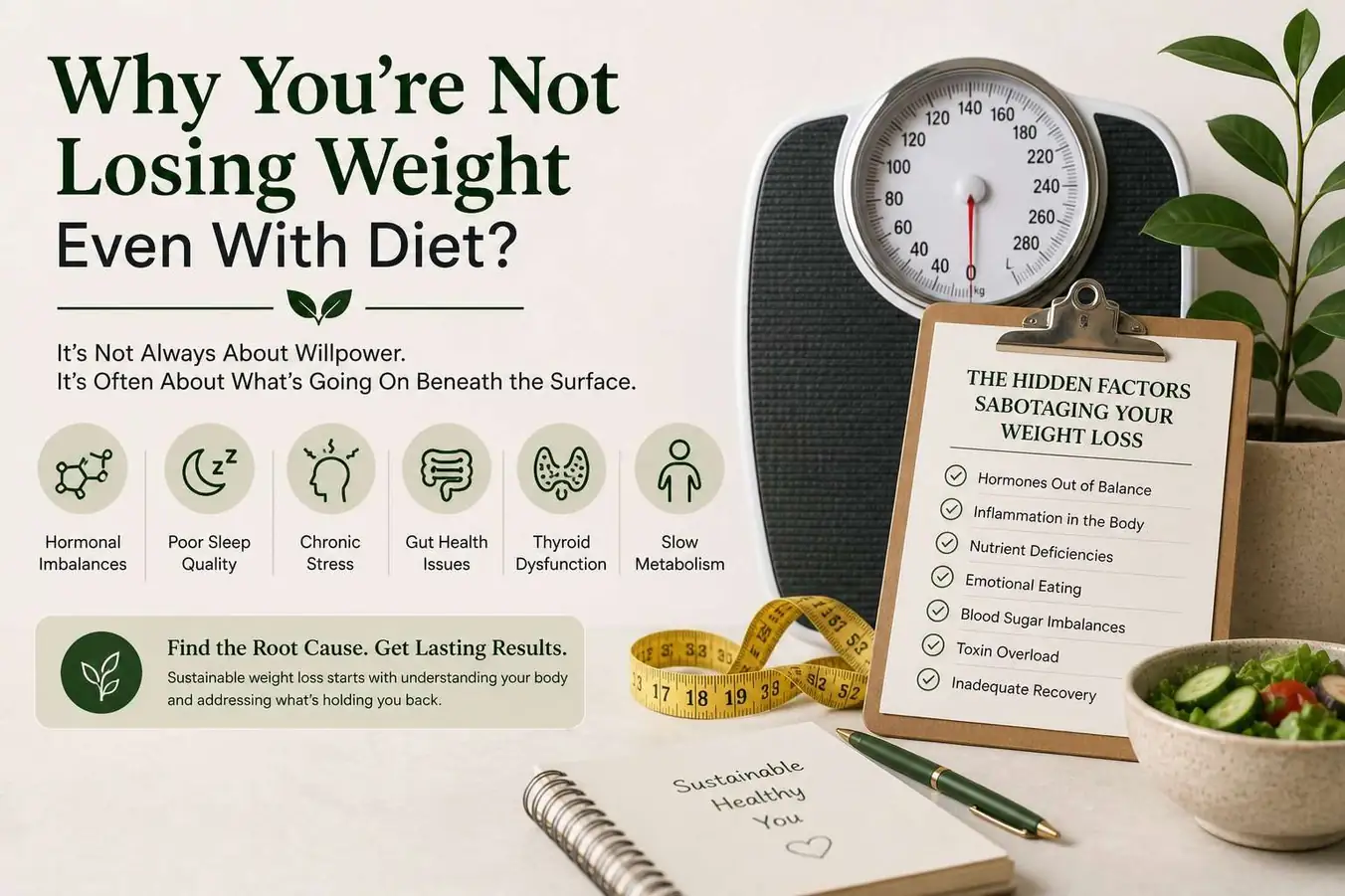
You are eating less, choosing better foods, maybe even cutting out entire food groups, and the scale is not moving. Or worse, it moves briefly and then reverses. This is not a willpower problem, and it is not inevitable. There are specific physiological, hormonal, and behavioral reasons why weight loss stalls despite dietary effort, and many of them are correctable once they are identified. This article walks through the most common reasons people plateau or fail to lose weight despite following what appears to be a reasonable diet, and explains what a more complete approach looks like.
Your Calorie Deficit May Not Be What You Think
The most fundamental principle of weight loss is a calorie deficit, but estimating both intake and expenditure accurately is harder than most people realize. Studies consistently show that people underestimate food intake by 20 to 50 percent when self-reporting, even when they believe they are tracking carefully. Portion sizes, cooking oils, sauces, beverages, and condiments add up in ways that are easy to miss.
At the same time, online calorie calculators estimate expenditure based on general population averages and can be significantly off for individuals with specific metabolic profiles, muscle mass levels, or health conditions. Before concluding that there is a hormonal or metabolic barrier to weight loss, it is worth a rigorous assessment of actual intake versus actual expenditure, ideally with support from a provider who can assess both.
Purposeful Healing offers personalized diet plans developed with an understanding of each patient’s metabolic context, not generic calorie targets.
Hormonal Imbalances That Prevent Weight Loss
Several hormonal conditions directly impair the body’s ability to lose fat, even in the presence of a calorie deficit. The most common include:
Hypothyroidism: An underactive thyroid slows metabolic rate significantly. Even mild thyroid dysfunction can stall weight loss and increase fatigue, making dietary adherence harder. This is frequently underdiagnosed, particularly in women.
Insulin resistance: When cells stop responding normally to insulin, blood glucose stays elevated and the body favors fat storage over fat burning. Insulin resistance can exist for years before progressing to type 2 diabetes and is often present in patients who cannot lose weight despite dietary changes.
Elevated cortisol: Chronic stress drives cortisol production, which promotes fat storage particularly in the abdominal area. Patients under significant psychological or physical stress often find that dietary restriction alone produces minimal results.
Sex hormone imbalances: Low testosterone in men and estrogen dominance or low estrogen in women can both impair body composition and fat metabolism. Hormonal shifts during perimenopause and menopause are a particularly common contributor to weight gain resistance in women.
Leptin resistance: Leptin is the hormone that signals satiety to the brain. When the brain stops responding normally to leptin, hunger signals are amplified and metabolism slows. This is common in patients who have been significantly overweight for extended periods.
Comprehensive evaluation for these hormonal factors is part of the metabolic assessment available through Purposeful Healing’s weight loss services and medical weight loss program.
Metabolic Adaptation: When the Body Fights Back
When calorie intake is reduced, the body responds by reducing metabolic rate. This adaptive thermogenesis is the body’s survival mechanism, and it can be substantial. Research has shown that metabolic rate can fall by 10 to 25 percent below predicted values in individuals who have been in a sustained calorie deficit. This is one of the main reasons why diets that worked initially stop working over time.
Metabolic adaptation is worsened by large, rapid deficits that also cause muscle loss. Muscle is metabolically active tissue, and losing it reduces baseline calorie expenditure further. This is why aggressive crash dieting often leaves people worse off metabolically than before they started, with less muscle and a slower metabolism that makes maintenance difficult.
A structured approach that preserves muscle mass through adequate protein and resistance exercise, combined with strategic calorie cycling rather than constant restriction, is more effective long-term. Our article on sustainable weight loss for women over 60 covers this in more detail for patients in higher-risk age groups.
Poor Sleep and Its Effect on Weight
Sleep deprivation directly affects two key appetite-regulating hormones: ghrelin, which stimulates hunger, increases with poor sleep; leptin, which suppresses hunger, decreases with poor sleep. The combined effect is increased appetite, particularly for calorie-dense foods, and reduced ability to feel satisfied. Studies show that people who sleep fewer than seven hours per night consistently consume more calories than those who sleep adequately.
Poor sleep also elevates cortisol, impairs glucose regulation, and reduces physical energy, making exercise less productive. For patients who are doing everything right with diet but still not losing weight, sleep quality is one of the first things worth evaluating.
Gut Microbiome and Weight
Research over the past decade has established that gut bacteria composition influences how efficiently calories are extracted from food, how inflammation is regulated, and how hormones related to appetite and metabolism are produced. Patients with gut dysbiosis, meaning an imbalanced or unhealthy microbiome, may extract more calories from the same food, experience higher levels of systemic inflammation, and have dysregulated appetite signals.
Diets high in processed foods, history of antibiotic use, chronic stress, and poor sleep all negatively affect the microbiome. Addressing gut health through dietary fiber, fermented foods, probiotics, and stress management is an important component of comprehensive weight management that most standard diet programs ignore.
Stress and Emotional Eating
Chronic stress produces a pattern that is physiologically designed to increase weight. Elevated cortisol increases appetite, particularly cravings for high-carbohydrate and high-fat foods. Stress also drives emotional eating as a coping mechanism, which is often automatic and underrecognized. Patients in chronic stress states may genuinely believe they are adhering to their diet while consistently eating more than intended in response to emotional triggers.
Addressing stress is not secondary to a weight loss plan. It is central to it. Purposeful Healing offers lifestyle counseling that addresses the behavioral and psychological dimensions of weight management alongside the physiological ones.
Exercise May Not Be Compensating Where You Think
Many patients increase exercise without seeing weight loss because of two related dynamics. First, exercise increases appetite, and many people unconsciously eat more to compensate for the extra expenditure. Second, the calorie burn from most forms of exercise is lower than people estimate, and relying primarily on cardio without resistance training fails to build the muscle mass that elevates resting metabolism.
A weight management exercise program should include resistance training to preserve and build muscle, moderate-intensity cardio for cardiovascular health and calorie expenditure, and attention to non-exercise activity throughout the day, which often accounts for more total energy expenditure than formal workouts.
Physical therapy for weight management, available at Purposeful Healing through the PT for weight management program, combines targeted exercise prescription with injury prevention and functional movement assessment for patients who have struggled with exercise due to pain or physical limitations.
Frequently Asked Questions
How do I know if hormones are causing my weight loss plateau?
A comprehensive metabolic and hormonal blood panel can identify thyroid dysfunction, insulin resistance, sex hormone imbalances, and cortisol patterns. If you have been dieting consistently without results, requesting this evaluation from your provider is a logical next step.
Can a very low calorie diet actually slow my metabolism?
Yes. Severe calorie restriction triggers metabolic adaptation and muscle loss, both of which reduce baseline metabolic rate. This is why aggressive dieting often produces initial results followed by a prolonged plateau that is difficult to break without structured dietary cycling and exercise.
Does the keto diet help with insulin resistance?
Low-carbohydrate and ketogenic diets can be effective for improving insulin sensitivity by reducing the glycemic load that drives insulin secretion. However, long-term adherence is challenging for many patients, and there are other dietary approaches that also improve insulin sensitivity with better sustainability.
What blood tests should I ask for if I am not losing weight?
A useful panel includes TSH and free T3 and T4 for thyroid function, fasting insulin and glucose for insulin resistance, hemoglobin A1c, a full sex hormone panel including testosterone and estrogen, cortisol, and a comprehensive metabolic panel. Your provider can help interpret these in the context of your symptoms and history.
Does lymphatic drainage help with weight loss?
Lymphatic drainage does not burn fat or calories. However, it can reduce fluid retention and swelling that contribute to body heaviness and discomfort, and it supports detoxification processes that are relevant to overall metabolic health. It is best understood as a supportive tool within a broader weight management plan, not a primary weight loss treatment.
Conclusion
If you are eating well and still not losing weight, you are not doing it wrong. You may simply be dealing with one or more physiological factors that a diet alone cannot overcome. Hormonal imbalances, metabolic adaptation, poor sleep, gut dysbiosis, and stress are all clinically meaningful barriers to weight loss that require evaluation and targeted treatment. At Purposeful Healing, weight management is approached as a medical question, not a motivational one. The team offers comprehensive assessment and individualized treatment plans that address the full range of factors affecting your metabolism, so that dietary changes can actually produce the results you are working toward.
Medical Disclaimer
This article is intended for informational and educational purposes only and does not constitute medical advice. The content should not be used as a substitute for professional medical diagnosis, treatment, or guidance. Always consult a licensed healthcare provider before making any changes to your health routine, medications, or treatment plan. Individual results may vary.